The open source alternative to Devin.
engrams runs Claude Code, Codex, or your own agent in an isolated microVM on your infrastructure. Start one from a prompt, a schedule, a pull request, or a Slack thread. Walk away mid-task, and pick it up days later with its files and history intact.
Run your whole stack.
Each agent gets its own microVM, so it can clone the repo, install dependencies, run the build, and start a dev server.
Stay involved.
Delegate from Slack, inspect the changes, and reply in the thread to steer. You stay in the conversation while agents work in your cloud.
Keep keys out.
Give an agent the API operations it needs. For brokered integrations, the proxy inserts the credential outside the VM and blocks requests the policy does not allow.
Pay for work, not idle VMs.
When a session goes idle, engrams snapshots it to object storage and frees the host for other work. The next prompt restores it on any host in seconds. Give every service its own agent without a VM running for each.
Run any harness in a rich web interface.
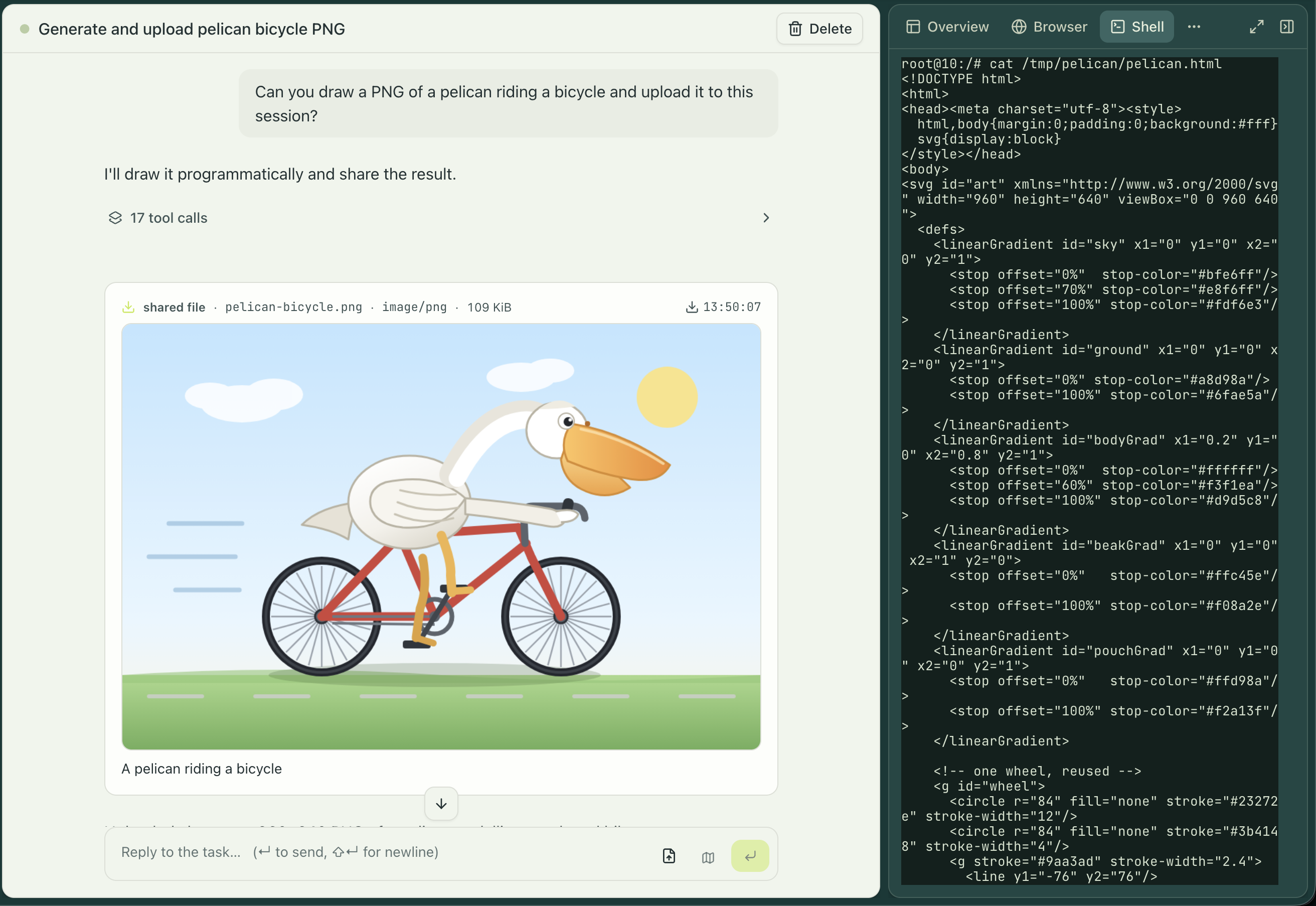
A session is Claude Code, Codex, or your own harness, working the way it does on your laptop, but in a microVM your team can reach. The transcript streams on the left. On the right, open the same machine the agent is using: a terminal, the browser it drives, VS Code, the files it changed. People start sessions from the dashboard or Slack; an automation starts the same kind of session from a trigger.
Delegate from the thread you're already in.
@mention the bot and a session opens for that thread, running as you, with your credentials. Reply to steer it, and your replies join the same run. When an automation has news, it posts to the channel and you answer right there: tell it a pull request is failing CI, and the same agent diagnoses the failure, pushes a fix, and reports back when the build is green.
- Starts from a mention
- Runs as whoever asked
- Replies join the run
- Agents report in
Nightly dependency upgrade: opened 3 pull requests. #4182 (stripe-node 17 → 18) is failing CI.
@engrams #4182 is failing on the webhook tests. Can you fix it?
On it, in the same session that opened #4182.
stripe-node 18 renamed the signature header type. Pushed a fix to #4182. CI is green.
Hand off the work that repeats.
A schedule, a pull request, a Slack mention, or a webhook can start a session, with no one typing a prompt. When one prompt is not enough, chain steps into a workflow: prompt the agent, run the tests, branch on the result, and post to Slack or GitHub.
Dependency upgrades and CVE fixes
Scans for outdated dependencies and open CVEs, opens each upgrade, runs the tests, and fixes what breaks. One pull request per change, reviewed by the pull request bot.
Memory hot spots
Queries Datadog profiles for the largest allocation frames, opens a task on the service that owns the code, and rewrites the hot path. The pull request carries the before and after numbers.
Bug triage
A new production error opens a run. The agent reproduces and diagnoses it, then pushes a fix or files an issue with the root cause. Duplicate errors join the run already in flight.
A project with an owner
One agent watches a Linear project and its Slack channel. It picks up issues, opens pull requests, answers questions in the thread, and posts a daily status.
Every run is a session you can open.
Open a run to see each step, its inputs and outputs, and the session that did the work. Read the transcript, reply to the agent, or take over in its shell. Runs survive a server restart and can wait hours for a reply without holding a VM.
Pull request review
A finder and a verifier review each pull request on the repositories you list, and post the confirmed findings as one GitHub review.
Start in a second.
Pick up anywhere.
Bring your image
Push any Linux image with /bin/sh and enable it once. engrams boots it, runs your warm-up command, and saves the result, so installs and caches are done before the first session.
Start warm
A prompt or a trigger starts a session from that saved state in under a second, with dependencies installed and caches already warm.
Sleep, wake, fork
An idle session is saved to storage and its VM is released. The next prompt wakes it on any host in one to two seconds. Fork a session to try two approaches from the same point.
† Measured on Cortex's deployment: GKE, C3 nodes, Firecracker with lazy memory paging.
Make it work with your stack.
Connect an internal service or run another agent without building a separate control plane. Custom harnesses use the same session UI; custom connectors use the same credential broker and access policies as the built-ins.
Change agents. Keep your setup.
Register an agent through the harness SDK and descriptor. It appears in the picker with its models, modes, and effort levels. The host mounts it at boot, separately from your image.
Connect the tools your work needs.
Define a service’s hosts, credential headers, and allowed operations. The proxy enforces those rules and inserts the key outside the VM. Profiles choose which connections each session can use.
Start.
Run the stack locally and give an agent its first task. When you are ready for a shared deployment, follow the GCP or AWS guide to run engrams in your own cloud.